Current
Hiawatha First Nation: Open Letter to the Prime Minister of Canada Regarding the Public Address Given at the World Economic Forum in Davos
Press release Feb 9, 2026 "Indigenous Land and resources Today
Aaniin Prime Minister Carney,
Boozhoo. Atik Dodem, Ajijak Dodem, Mgizi Kwe Ndishnikaz, Laurie Nooswin, Minoomingaming Ndoonjaba, Michi Saagiig Anishinaabe Kwe Ndaaw, Gimma Hiawatha. I am from the Hoof Clan, related to the Crane Clan on my mother’s side. My Anishinaabe Kwe name is Eagle Woman. My English name is Laurie. I am from the Mississauga Nation and Chief of our community, Hiawatha First Nation.
I wish to acknowledge and commend your address at the World Economic Forum in Davos. Your remarks were delivered with clarity and confidence, and they presented Canada as a principled and forward-looking nation on the global stage.
That said, upon careful reflection, I must openly express our truth as one of the many Sovereign Nations within Canada, and as a First Nation. The values and narratives articulated in your speech do not fully align with the realities experienced by Sovereign Nations and First Nations Peoples in this country. While Canada is often presented internationally as unified and inclusive, this portrayal does not consistently reflect the nation-to-nation relationships, treaty obligations, and ongoing systemic inequities that shape our lived realities. This discrepancy between international representation and domestic truth warrants direct and thoughtful consideration.
At Davos, you told the world: “You cannot live within the lie of mutual benefit through integration when integration becomes the source of your subordination.” First Nations in Canada have been living that lie for generations.
You also warned that “middle powers must act together because if we’re not at the table, we’re on the menu.”
For First Nations, this is not rhetoric. It is policy. It is practice. It is lived experience.
We are not at the table where decisions about our lands, waters and economies are made. As a result, our territories are treated as the menu, allocated, leased, regulated and exploited without our consent, while we are invited afterward to manage the fallout.
We were told that integration would bring prosperity, security and shared benefit. Instead, it became the mechanism of our dispossession of our lands, our laws, our languages and our economies. Integration, as imposed by the Canadian state, did not lift us up. It subordinated us. It demanded our participation without power and our consent without control.
You warned that “a country that cannot feed itself, fuel itself, or defend itself has few options.”
Yet Canada systematically denies First Nations the very capacity to do those things. Our communities live under long-term boil-water advisories in one of the most water-rich countries on Earth. We are blocked from developing our own energy resources while projects cross our territories without consent. Our food systems were dismantled through policy, land theft and regulation, and then we are blamed for the dependency those actions created.
You said, “That’s building a strong domestic economy. It should be every government’s immediate priority.”
Then this reality must be named plainly, the most fundamental ingredient of any economy is a land base, one rich in resources. Those resources are harvested, extracted and grown from that land. They generate work, commodities and revenue. That revenue builds a workforce and tax base that funds roads, infrastructure, schools and hospitals. That workforce then requires services and goods, expanding the economy further and creating more businesses and jobs. This is not abstract theory. It is the foundation of Canada’s economy.
That land base came from Indigenous Peoples. As stated by Lake Huron Regional Chief, Scott McLeod Shabogesic, “the Indigenous Nations of this land signed treaties to share our territories so that Indigenous and non-Indigenous peoples could prosper together from its richness. Instead, our Peoples were raped, murdered, removed, confined to reserves, thrown into residential schools and jails, marginalized from the economic benefits of our own lands and made the poorest Peoples in the country as a result.
So, no matter what job or business one holds in this country, the truth remains, Indigenous Peoples have paid, and continue to pay, for Canada’s economy every single day. No land base means no country. No country means no economy. No economy means no jobs. It is, in fact, that simple.”
You said, “When the rules no longer protect you, you must protect yourself.”
For First Nations, the rules have rarely protected us. Treaties are broken as a matter of convenience. Court rulings are delayed, appealed, or ignored until they lose force. International declarations are celebrated abroad and neutralized at home. When we act to protect our lands and waters, we are met not with partnership, but with injunctions, police forces and criminalization.
At Davos, you cautioned against “a world of fortresses,” warning it would be “poorer, more fragile and less sustainable.”
Prime Minister, Canada has already built a fortress on First Nations lands. Wealth is extracted at scale, while our communities remain systemically underfunded, overcrowded and constrained across all sectors. The fragility you warned the world about is not theoretical. It is manufactured here through policies that prioritize speed and profit over consent, sustainability and justice.
You spoke of “risk management,” “shared investments in resilience,” and “positive-sum complementarities.”
Yet when First Nations demand revenue sharing, jurisdiction, or equity in projects on our territories, we are told the risk is too high, the timelines too tight and the cost too great. Resilience is demanded of us but rarely invested in with us.
You described Canada as “principled and pragmatic,” committed to sovereignty, territorial integrity and human rights.
First Nations ask a simple question, whose sovereignty? Our Nations were sovereign long before Confederation. Our territorial integrity has been systematically eroded. Our human rights are treated as negotiable, conditional, aspirational, but never foundational.
You said Canada engages the world “with open eyes,” taking it as it is, not as you wish it to be.
Then apply that clarity at home. See that reconciliation cannot coexist with ongoing land dispossession. That partnership is impossible when free, prior, and informed consent is treated as a procedural checkbox rather than a binding standard. That sovereignty cannot be performed while control is withheld.
At Davos, you warned against “the performance of sovereignty while accepting subordination.”
Prime Minister, this is precisely what Canada demands of First Nations, participation without power, consultation without influence, reconciliation without restitution. We are asked to stand politely at the edge of the room while decisions are made and then told we were included.
You called for “naming reality.”
So let us name it. Canada speaks the language of values abroad while practicing expediency at home. It champions a rules-based order internationally while treating First Nations rights domestically as obstacles to be managed, delayed or overridden.
You concluded by saying Canada is “taking a sign out of the window.”
We urge you to take another sign down, the one that tells the world Canada has moved beyond colonialism while continuing to benefit from it every day.
If Canada truly believes that those not at the table end up on the menu, then it must confront an uncomfortable truth, for far too long, First Nations have been deliberately excluded and consumed.
Anything less than structural change is not leadership. It is, in your own words, the performance of sovereignty while accepting subordination.
Prime Minister, I ask that you reflect on your speech and apply the same clarity in “naming reality” to Canada’s relationship with First Nations Peoples in this country we all call home.
Miigwetch,
Chief Laurie Carr
Hiawatha First Nation
June 23, 2020, during this time of COVID Pam Palmater gives a comprehensive overview of the complexity of the current interwoven issues facing Indigenous People across Turtle Island. A powerful and disturbing picture. Important for all Canadians to know. Dr. Palmater’s talk starts at 7:12
Residential Schools – Children’s Remains Found June 2021
Residential Schools were a government-mandated policy officially enacted in 1880 with the passage of the Residential Schools Act… These schools were designed to ‘kill the Indian in the child.” Laws dictated that families must send Indigenous children as young as four to these boarding schools. There were no exceptions. RCMP officers forcibly removed children from families who would not comply, and fined and sent parents to jail ~ Hollyhock.ca
Mississauga Nation
The Mississauga Nation is the united communities of Curve Lake First Nation, Hiawatha First Nation, Mississaugas of the Credit First Nation, Mississauga First Nation, Alderville First Nation and the Mississaugas of Scugog Island First Nation. Their Facebook page and website features many current events, language learning opportunities and celebrates the accomplishments of community members.
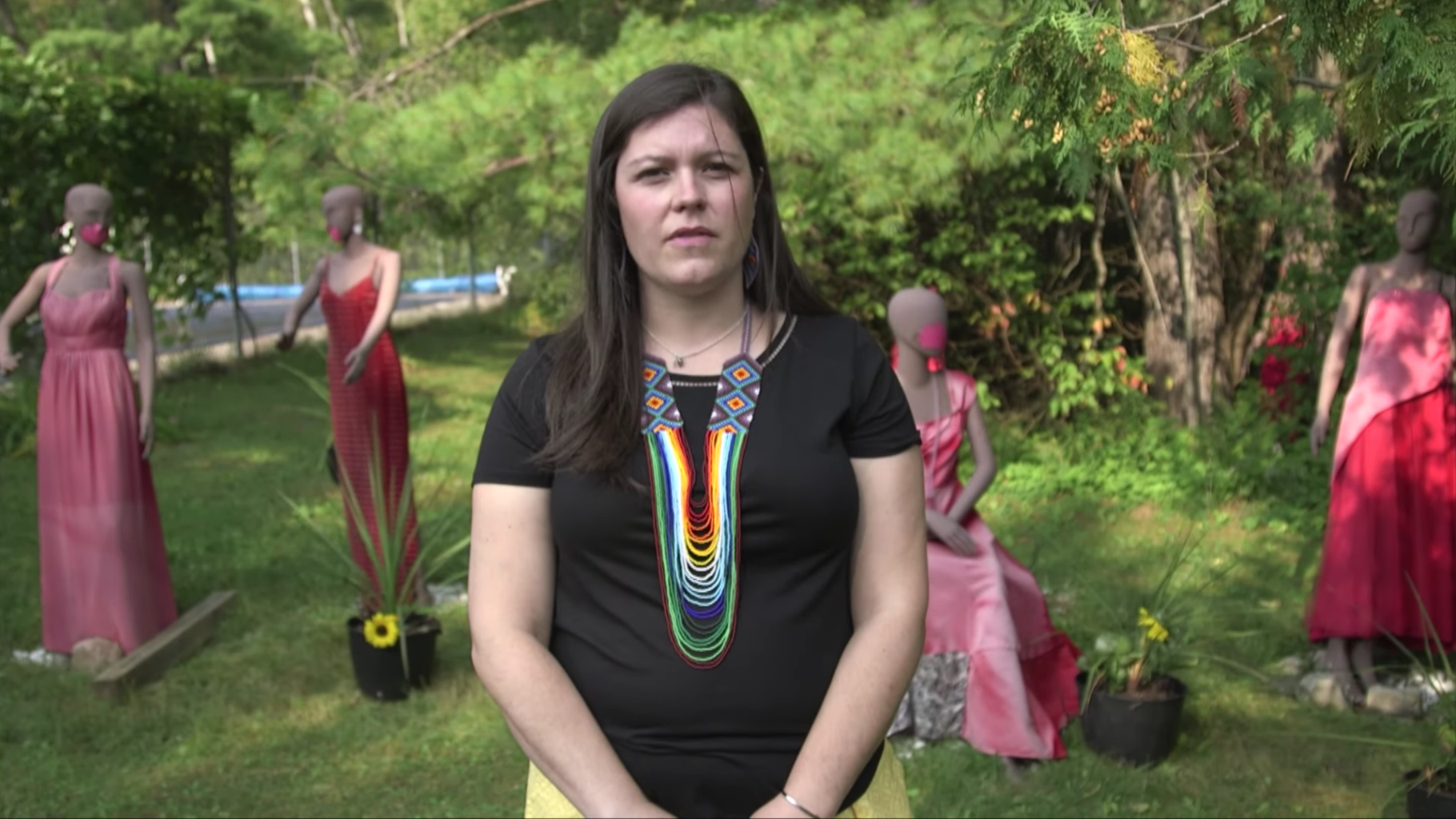
MMIWG – Dedication to Cileana Taylor
October 1, 2020 Curve Lake First Nation presents a video praying for the recovery of Cileana Taylor. She is a recent victim of domestic violence.
UNDRIP
The United Nations Declaration on the Rights of Indigenous Peoples delineates and defines the individual and collective rights of Indigenous peoples, including their ownership rights to cultural and ceremonial expression, identity, language, employment, health, education and other issues. Wikipedia

UNDRIP Passed Into Law
June 18th 2021 – Ceremony marking the passage of Canada’s UNDRIP bill.
“This bill is a powerful tool for building a better relationship with Canada in which those rights, our rights, must be respected and upheld and implemented. And it is part of our road map to reconciliation in this country,”National Chief Perry Bellegarde
The inclusion of a strong repudiation of the doctrines of discovery and terra nullius were important to include and specifically delineate in the legislation because it was those doctrines that the European settlers used to try to eliminate Indigenous rights and subjugate First Peoples, he explained.
Those colonialist ideologies are what eventually led to the creation of the residential school system, disputes about land claims and resource development rights and ongoing systemic racism within many of Canada’s institutions.
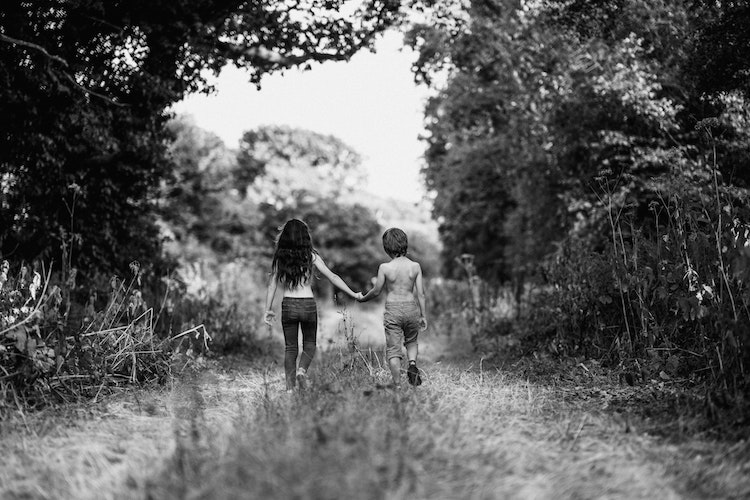
Sixties Scoop Impact
…the drastic overrepresentation of Aboriginal children in the child welfare system accelerated in the 1960s, when Aboriginal children were seized and taken from their homes and placed, in most cases, into middle-class Euro-Canadian families. This overrepresentation continues today.~ excerpt from indigenousfoundations.arts.ubc.ca
Child Care
“Across Canada, despite Indigenous children accounting for only seven per cent of the youth population as counted in the 2016 Census, 52 per cent of children in foster care are Indigenous. This means just under 15,000 children in private foster care homes under the age of 15 are Indigenous”.~ CTVNews
Action Toward Reconciliation
In this blog article Calls To Action Accountability: A Status Update On Reconciliation Dr. Eva Jewell and Dr. Ian Mosby take a critical look at Canada’s progress to date on implementing the Calls to Action recommended in the final report of the Truth and Reconciliation Commission. (2019)

Clean Water
The story of the water supply in Nibinamik, an Oji-Cree First Nation in northern Ontario—accessible by plane and, in winter, an ice road illustrates the complexity of the issue of providing clean water in Indigenous communities. The Walrus Oct 2019 update Feb 2020

Indigenous Rights : Wet’suwet’en Territory
“The underlying concern of the Wet’suwet’en Nation surrounds the control of their traditional territory. (The)…Wet’suwet’en Nation never surrendered its Aboriginal title, otherwise known as its inherent right to the land.”CTVNews.ca